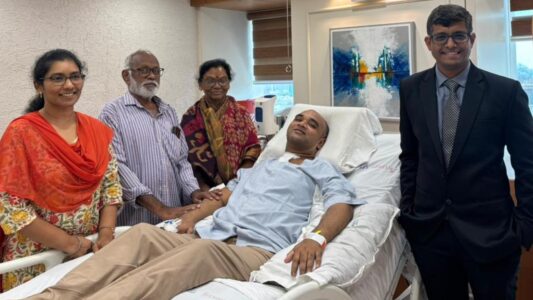
In an inspiring medical case of neuro-rehabilitation, doctors at a Mumbai hospital have helped a 38-year-old man regain the ability to breathe independently after spending nearly six months dependent on a ventilator following a severe cervical spinal cord injury.
The man, a resident of Hyderabad, had suffered a devastating cervical spinal cord injury following a major accident that left him paralysed below the neck. The injury resulted in complete loss of movement and sensation in his limbs and, most critically, took away his ability to breathe independently.
Initially admitted to an intensive care unit in Hyderabad, he spent nearly two months on continuous ventilator support and remained dependent on assisted breathing for almost six months despite treatment at multiple healthcare centres. Doctors had reportedly informed the family that prolonged ventilator dependence could be unavoidable.
Determined to explore further options, the family approached Dr Manish Baldia, consultant Functional Neurosurgeon at Mumbai`s Wockhardt Hospitals in Mumbai Central, known for his expertise in advanced neuromodulation and phrenic nerve stimulation procedures.
After detailed assessment, the man was shifted to Mumbai under specialised medical supervision. Attempts to gradually reduce ventilator support revealed dangerously high carbon dioxide retention levels, confirming that he was still unable to breathe adequately on his own.
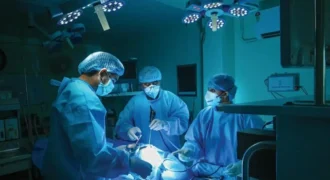
Following evaluation, Dr Baldia performed a highly specialised phrenic nerve stimulation procedure, an advanced intervention designed to stimulate the diaphragm by activating the phrenic nerve responsible for breathing.
The response was remarkable. Within just three to four days after the procedure, the man began showing improvement, and by the third week he was stable enough to be shifted out of the ICU.
Dr Baldia explains, “In high cervical spinal cord injuries, communication between the brain and breathing muscles gets disrupted. Through phrenic nerve stimulation, we attempt to bypass that interruption and directly activate the diaphragm so the patient can gradually regain independent breathing.”
He further adds, “While this procedure does not reverse the spinal cord injury itself, restoring independent breathing significantly improves quality of life. It allows patients to communicate better, actively participate in rehabilitation and reduce prolonged dependence on critical care support.”
Commenting on the significance of the case, Dr Virendra Chauhan, Centre Head at the city hospital, says, “This case reflects how advanced medical expertise and innovation can transform outcomes even in highly challenging situations. Such interventions are opening new possibilities in neuro-rehabilitation and bringing hope to patients and families facing long-term challenges.”
Though the patient continues rehabilitation because of the severity of the spinal cord injury, the impact has been life-changing. He can now breathe independently, speak comfortably with his family and even sing again — something unimaginable just weeks earlier.
The case, the hospital says, is believed to be among Mumbai’s first phrenic nerve stimulation procedures performed to restore independent breathing in a patient with severe cervical spinal cord injury.
Mumbai doctors help paralysed Hyderabad man breathe on his own after six months