Doctors in Pune have given a 32-year-old woman from Nairobi a new lease of life after suffering from a severely weakened condition with severe nutritional deficiencies, recurrent abdominal infection, sepsis, continuous pus drainage and a persistent leak following previous surgery. The woman had undergone 11 weight-loss and revision procedures over 15 years, when she reached the city and finally found relief.
Chances of survival
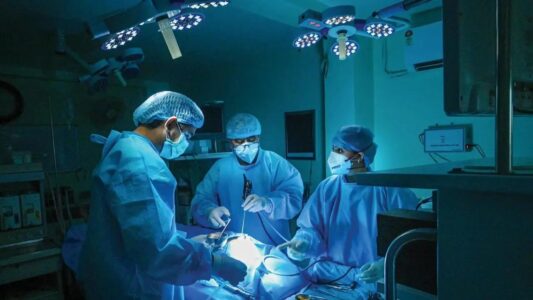
With her condition considered extremely high-risk and her chances of survival estimated at only around 20 per cent, a team led by Dr. Shashank Shah, Bariatric and Laparoscopic Surgeon at Laparo Obeso Centre (LOC) in Pune’s Sadashiv Peth, first stabilised her medically before performing a complex laparoscopic gastro-gastric re-anastomosis with endoscopic stent placement to address the leak and restore continuity of the stomach. After weeks of intensive medical care, nutritional support, physiotherapy and repeated endoscopic stent adjustments, the leak healed and she was discharged at 86 kg, able to eat normally and walk independently.
The woman from Nairobi was a healthy and active teenager, but her life began to change as her weight increased rapidly. By the age of 17, she weighed nearly 200 kg, bringing both physical and emotional challenges. Determined to lose weight and regain control of her life, she began a medical journey that would eventually involve 11 weight-loss and revision procedures. In 2011, she underwent a sleeve gastrectomy, following which she lost around 35 kg. After regaining weight, she underwent a banded Roux-en-Y gastric bypass in 2015, bringing her weight down to approximately 90 kg. However, she subsequently regained weight. In 2020, she travelled to Dubai, where she underwent an aggressive revision procedure of the duodenal-switch type, designed to produce greater weight loss but associated with significant malabsorption.
The procedure was followed by serious nutritional problems. Over time, the woman developed multiple nutritional deficiencies, weakness, and repeated fainting attacks. She did not tolerate the effects of the procedure well. During this period, she also underwent procedures for piles and cosmetic surgery.
Finding hope in timely treatment
In 2026, she returned to Mumbai for another major revision procedure, where the band was removed, and an attempt was made to reconnect the stomach in an effort to address the effects of her previous surgeries and nutritional problems. However, her condition took a dangerous turn following the procedure. On the fifth day, around two litres of pus had accumulated in her abdomen, requiring drainage. Within a few days, further pus collected and another drain tube had to be placed. She developed a severe infection and a persistent leak, requiring intravenous antibiotics and continued medical care. Her condition became increasingly difficult. She was in severe pain, and whatever liquids she consumed were coming out directly through the drainage tube. By then, she was extremely weak, breathless, and unable to walk without assistance, eventually requiring a wheelchair.
It was at this critical stage that her family sought help from Dr Shah. The connection was deeply personal. Dr. Shah had operated on the woman’s uncle, who was from Tanzania, nearly 20 years earlier. She was subsequently brought to the treatment centre, and admitted on June 21.
By the time she reached, she had already undergone 11 operations. Years of previous surgeries had left everything inside her abdomen stuck together, making the case technically very difficult. The stomach-to-stomach connection was also completely torn, with pus and severe inflammation present in the abdomen. She was suffering from severe nutritional deficiencies, infection, and sepsis and was physically exhausted. During her stay, she was supported by a dedicated staff nurse attending to her round-the-clock all the time.
For Dr Shah and his team, the immediate priority was not another operation but getting the woman strong enough to survive one. The team carried out detailed evaluations, including CT imaging and endoscopy, while working to correct her nutritional deficiencies, provide blood and iron where required, control the infection with antibiotics, and improve her strength through nutritional support, intensive medical care, and physiotherapy.
Despite everything she had been through, the woman held on to one simple wish. When she met Dr. Shah, she told him, “Doctor, I just want to live.”
Dr Shah said, “This was an exceptionally challenging case because the patient had already undergone 11 operations, including multiple weight-loss and revision procedures, and had now developed a major leak with severe infection. When she came to us, she was extremely weak, had severe nutritional deficiencies, was breathless, and was unable to walk without assistance. Inside the abdomen, everything was stuck because of the previous surgeries; there was pus and severe inflammation, and the stomach-to-stomach connection was completely torn. Her immediate problem was not her weight but whether she was strong enough to survive another procedure. We therefore did not rush into surgery. She was evaluated with CT imaging and endoscopy, and we first worked on correcting her nutritional deficiencies, giving blood and iron where required, controlling the infection with antibiotics, and providing intensive medical care and physiotherapy. At that stage, we had estimated that her chance of survival was only around 20 per cent.”
Once her condition improved sufficiently, the surgical team decided to operate on her. Given the extensive previous surgeries, severe inflammation, and damaged tissues, the procedure was technically demanding.
Dr Shah further added, “On July 2, we performed a complex laparoscopic gastro-gastric re-anastomosis, in which we surgically reconnected the stomach. However, the tissues were severely inflamed and had poor healing capacity because of the repeated operations and infection. Therefore, surgery alone was not sufficient. We used an endoscopic stent to help divert food and digestive fluids away from the affected area and give the leak a chance to heal. The stent required regular endoscopic assessment and could not simply be placed and left in position. We had to check it every week and adjust or reposition it around four to five times as healing progressed.”
He added, “Alongside this, she continued to receive nutritional support, antibiotics, physiotherapy and close monitoring. She had barely been able to take anything by mouth for nearly two and a half months, with even liquids previously draining out through the tube, so rebuilding her nutrition and physical strength was as important as treating the surgical problem. Gradually, the leak healed, the infection settled, and she was able to return to a full diet. Just two days before getting discharged on July 27, she was able to eat a full diet again after nearly two and a half months and was enjoying food after such a long period. By then, everything had healed, and she was clinically well, walking independently and able to carry out her daily activities.”
The woman received round-the-clock nursing care during her recovery. Now preparing to return to Nairobi, she has been advised to continue her nutrition plan, physiotherapy and follow-up care. She was also given an injection to reduce the risk of blood clots during travel.
The woman said, “At the age of 17 or 18, being told that ‘fat is ugly’ affected me deeply. I went through so many problems in my life, and there were moments when I felt completely exhausted and did not know what would happen next. My community stood by me and helped me financially through this difficult treatment, and I will always be grateful for that support. I am also deeply grateful to Dr Shashank Shah and his entire team for giving me another chance. Today, being able to eat normally, walk on my own, and look forward to going home means everything to me. I am doing well now and hope to resume work as a management consultant after further recovery.”
With 20 pct chance at survival, Nairobi woman gets a second chance at life