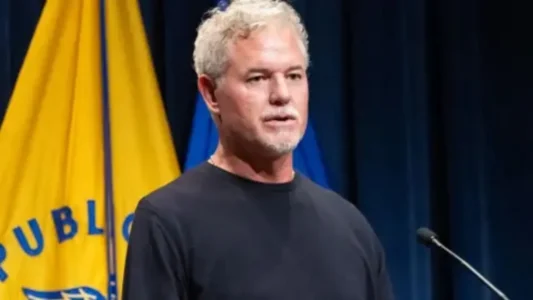
Grey’s Anatomy fans across India and the world woke up to bad news on February 20, as Eric Dane, popularly known as ‘McSteamy’ playing Dr Eric Sloan on the hit television show, passed away at 53 due to Amyotrophic lateral sclerosis, also called ALS. Dane, who was an advocate of ALS, also known as Lou Gehrig`s disease, succumbed to it less than a year after he announced his diagnosis in April 2025.
Shedding light on the disorder, Dr Sheetal Goyal, who is the consultant neurologist at Wockhardt Hospitals in Mumbai Central, explains, “ALS (Amyotrophic Lateral Sclerosis) is a progressive neurological disorder that affects the nerve cells responsible for controlling voluntary muscle movements. Over time, these motor neurons degenerate, leading to muscle weakness and loss of function.” In most cases, ALS occurs sporadically, and there is no clear family history, and around 5 – 10 per centof cases are inherited.
Mid-day spoke to Dr Goyal, and Dr. Arjun Shah, consultant neurologist and neurophysician at Saifee Hospital in Charni Road in Mumbai to break down the disorder. They not only highlight the causes but also the signs and symptoms, and the possibility of treatment.
What is Amyotrophic lateral sclerosis (ALS) and what are its causes?
Shah: ALS is a neurodegenerative disorder. Our nervous system starts in the brain and ends in the muscles in the hand. The nerve cells from the brain come down to the spinal cord to form the peripheral nervous systemincluding the nerves of the hands and feet. It is called the anterior horn cell. So, when the small anterior horn cell is affected, it is basically called ALS.
There are a lot of unknowns that we don`t understand why exactly it happens and may be due to some environmental or genetic factors. Basically, there is a lot of oxidative stress. There is a lot of damage that happens to these specific small nerves called the anterior horn cell and because they keep getting damaged over the years, they sort of shrink leading atrophy and get damaged.
Who is affected by Amyotrophic lateral sclerosis (ALS)?
Shah: It generally affects people who are even in their 40sand 50s. They are the ones who are generally affected. Although very rare, it can happen at an earlier or later age group also.
How does it affect the life of a person? Is it prevalent more in a particular gender?
Shah: In our country, we do see it a little more commonly in males. So, it can happen in males or females. And once ALS kicks in, usually, within a few years, the patient usually succumbs to it.
What are the signs and symptoms?
Goyal: Early symptoms may include weakness in the hands or legs, frequent tripping, difficulty in gripping objects, slurred speech, or muscle twitching. The symptoms usually worsen gradually.
Shah: Generally, it is a very slowly progressing disorder. It really starts with weakness either in one leg or one hand. Along with that, the patients notice that the hands have started shrinking and becoming very small and another thing that sometimes patients may or may not notice is, there are these things called fasciculation, which are tremors and all the muscles in the hand. There are twitching movements that happen in certain muscles.
Secondly, there is peeling of the hands or feet. Thirdly, these twitching in the muscles can be seen.
Can it be treated? How can friends and family help peoplewho are suffering from it?
Goyal: Currently, there is no cure for ALS. However, certain medications can help slow disease progression, and supportive therapies significantly improve quality of life. Early diagnosis, multidisciplinary care, and emotional support are crucial. While ALS is challenging, structured medical care can help patients maintain dignity and comfort.
Shah: In India or anywhere in the world, unfortunately, we don`t have a cure for this disease. Now, the treatment is more or less supportive. So whatever treatment can be given anywhere in the world can be given in India too. It`s not like we are lacking in any way. It is just that this disease overall doesn`t have a great treatment.
There`s something called tender loving care. I think friends and family just need to understand and they first need to accept themselves that their loved one is suffering from such an illness. Secondly, they should just give as much time as possible, as much love as possible to their patients with ALS. They should also understand the limitations of treatment. Sometimes there should not be any false hope and better way of putting it is friends and family should also accept that this is what the disease is, this is how it progresses and to make the most of the time they have together with a healthy person.
Is ALS considered serious?
Goyal: ALS affects muscles involved in movement, speech, swallowing, and eventually breathing. As the disease progresses, patients may require assisted ventilation and supportive care.
Here’s all you need to know about Grey’s Anatomy’ actor Eric Dane