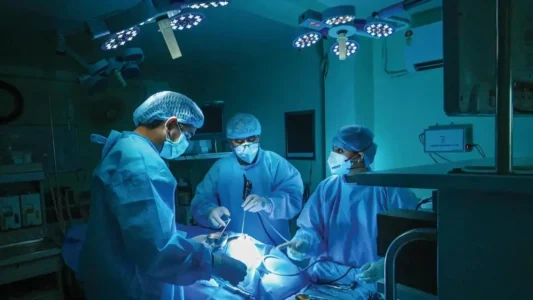
Bengaluru doctors have successfully saved the life of a 57-year-old woman who came to the hospital with giddiness and a newly developed headache. While there were no obvious clinical signs of stroke or bleeding, the headache was unusual enough to warrant further evaluation leading to an MRI. The scan showed no evidence of a stroke but instead, it revealed an aneurysm located at a critical junction of blood vessels deep within the brain. Fortunately, the aneurysm had not ruptured.
For many people, headaches have become a part of daily life. Stress, lack of sleep, dehydration, long working hours and constant screen exposure are often blamed—and in most cases, rightly so. A painkiller, a cup of coffee or a few hours of rest usually bring relief.
Why headaches should be taken seriously
The headache that deserves attention is often not the most severe one. It is the headache that feels different, says Dr Chinmay Nagesh, interventional neuroradiologist, Apollo Hospitals in Jayanagar because a dangerous headache is not always dramatic. It may simply be sudden, unfamiliar or completely out of character for that individual. In some cases, it can be the first warning sign of a brain aneurysm.
A brain aneurysm, he says, is a balloon-like bulge that develops in a weakened blood vessel within the brain. Most aneurysms remain silent for years and cause no symptoms. Many are discovered incidentally during scans performed for unrelated reasons. However, if an aneurysm ruptures, it can cause bleeding around the brain—a life-threatening emergency that may result in stroke, permanent neurological disability or death.
Dr Nagesh shares, “The woman’s case highlights an important entity, which is the sentinel headache of a brain aneurysm. A new headache—particularly one that develops later in life or feels distinctly different from previous headaches—deserves medical attention. The problem is not that people get headaches. The problem is that many people become too comfortable dismissing them. And this is precisely why early evaluation matters.”
Understanding the complexities of a brain aneurysm
The Bengaluru-based health expert says not every aneurysm requires treatment. Many small, low-risk aneurysms can be monitored safely with periodic imaging. However, treatment may be recommended when an aneurysm causes symptoms, has a higher-risk shape, is increasing in size, or is located in a region associated with a greater risk of rupture.
Over the past two decades, endovascular treatments (in which catheters are navigated through blood vessels to treat the aneurysm with coils from within) have become the preferred approach for many patients because it avoids open surgery and typically offers faster recovery and shorter hospital stays.
Dr Nagesh further explains, “The aneurysm in this patient presented a particular challenge because it had a wide neck. Such aneurysms have traditionally required placement of coils along with a supporting stent across the parent artery. While highly effective, stent-assisted treatment often requires prolonged antiplatelet medication to prevent clot formation within the stent. Instead, we used a newer device known as the Woven EndoBridge (WEB) device, an intrasaccular flow disruptor designed specifically for certain wide-necked aneurysms.”
He further explains, “The WEB device is a soft, mesh-like implant that is placed entirely inside the aneurysm. Once deployed, it conforms to the shape of the aneurysm and disrupts blood flow entering the sac, promoting gradual clotting and healing of the aneurysm from within. Because the device sits entirely inside the aneurysm, many patients can avoid placement of a permanent stent in the parent artery and do not require long-term antiplatelet therapy. This represents a significant advance in the treatment of carefully selected aneurysms. The procedure took approximately 90 minutes, and the patient recovered well enough to be discharged within 48 hours.”
Innovations such as intrasaccular devices are changing how brain aneurysms are treated. Procedures that once required major surgery can now, in selected patients, be managed through minimally invasive techniques with shorter hospital stays and faster recovery. However, technology and skilled doctors alone are not enough. Awareness remains critical because aneurysms often produce no warning signs until they become dangerous.
Dr Nagesh says people should seek immediate medical attention if a headache shows the following signs:1. Appears suddenly and reaches maximum intensity within seconds or minutes2. Feels like the worst headache of your life3. Is accompanied by vomiting, fainting or seizures4. Causes confusion, weakness or difficulty speaking5. Leads to blurred or double vision6. Is associated with neck stiffness7. Has a new headache pattern after the age of 50
Certain factors also increase the risk of developing brain aneurysms, including uncontrolled high blood pressure, smoking, excessive alcohol consumption and a family history of aneurysms.
The goal is not to create fear around every headache. Rather, it is to encourage people to pay attention when something feels unusual. In many cases, timely imaging and specialist evaluation can identify a brain aneurysm before it ruptures—and that can make the difference between a routine hospital visit and a life-threatening emergency.
Bengaluru docs save life of woman suffering from giddiness; give imp warning