An ordinary day turned into a race against time for a woman in her 50s when she was suddenly struck by an excruciating headache so severe that she believed something had exploded inside her head.
Within minutes, the pain became unbearable. Alarmed by her rapidly deteriorating condition, her family rushed her to Wockhardt Hospitals, Mumbai Central.
Investigations revealed a life-threatening subarachnoid haemorrhage — bleeding around the brain caused by the rupture of an aneurysm, a weakened bulge in a blood vessel. Further imaging identified the source of the bleed as a ruptured aneurysm located at the anterior communicating artery, one of the brain’s critical blood vessels.
The condition required immediate intervention
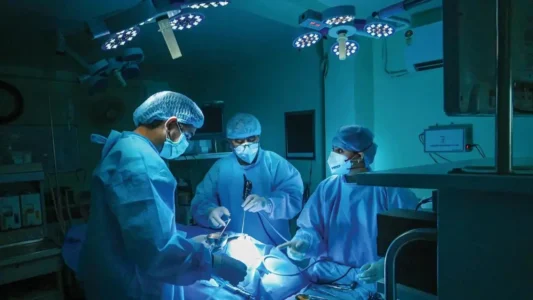
The woman came under the care of Dr Mazda Turel, consultant Brain and Spine Surgeon at the hospital, who recommended emergency surgery after assessing the severity of the haemorrhage.
“A ruptured brain aneurysm is one of the most dangerous emergencies in neurosurgery. Patients are often completely normal one moment and critically ill the next. The bleeding can cause sudden neurological deterioration and can be fatal if not treated urgently,” said Dr Turel.
The surgery involved carefully navigating through delicate structures surrounding the brain to reach the ruptured aneurysm. Once the aneurysm was identified, Dr Turel secured it using a specialised titanium clip, permanently isolating it from the circulation and preventing any further bleeding.
“The challenge lies in safely reaching the aneurysm while preserving the surrounding blood vessels that supply critical areas of the brain responsible for movement, speech, memory and cognition. Every step requires precision because even minor injury can have significant consequences,” explained Dr Turel.
The procedure was successfully completed, and the patient was shifted to the intensive care unit for close monitoring.
The recovery was encouraging
By the following day, she was awake, responsive and neurologically intact. Most notably, the severe headache that had brought her to the hospital had resolved.
Over the next few days, she continued to improve steadily and was discharged in stable condition. Today, she has returned to her routine activities and continues to recover well.
Reflecting on the case, Dr Turel emphasised the importance of recognising warning signs early. “The most common symptom of a ruptured aneurysm is a sudden, severe headache that patients frequently describe as the worst headache of their life. Such symptoms should never be ignored. Immediate medical evaluation and timely treatment can significantly improve the chances of recovery,” he said.
According to the city-based doctor, many people tend to dismiss severe headaches as stress, fatigue or migraine, often delaying medical attention during the critical window when intervention can be life-saving.
For this woman and her family, a terrifying medical emergency that struck without warning could have ended very differently but timely care helped her recovery.
Felt like something exploded: Woman survives life-threatening brain haemorrhage